%201.png)
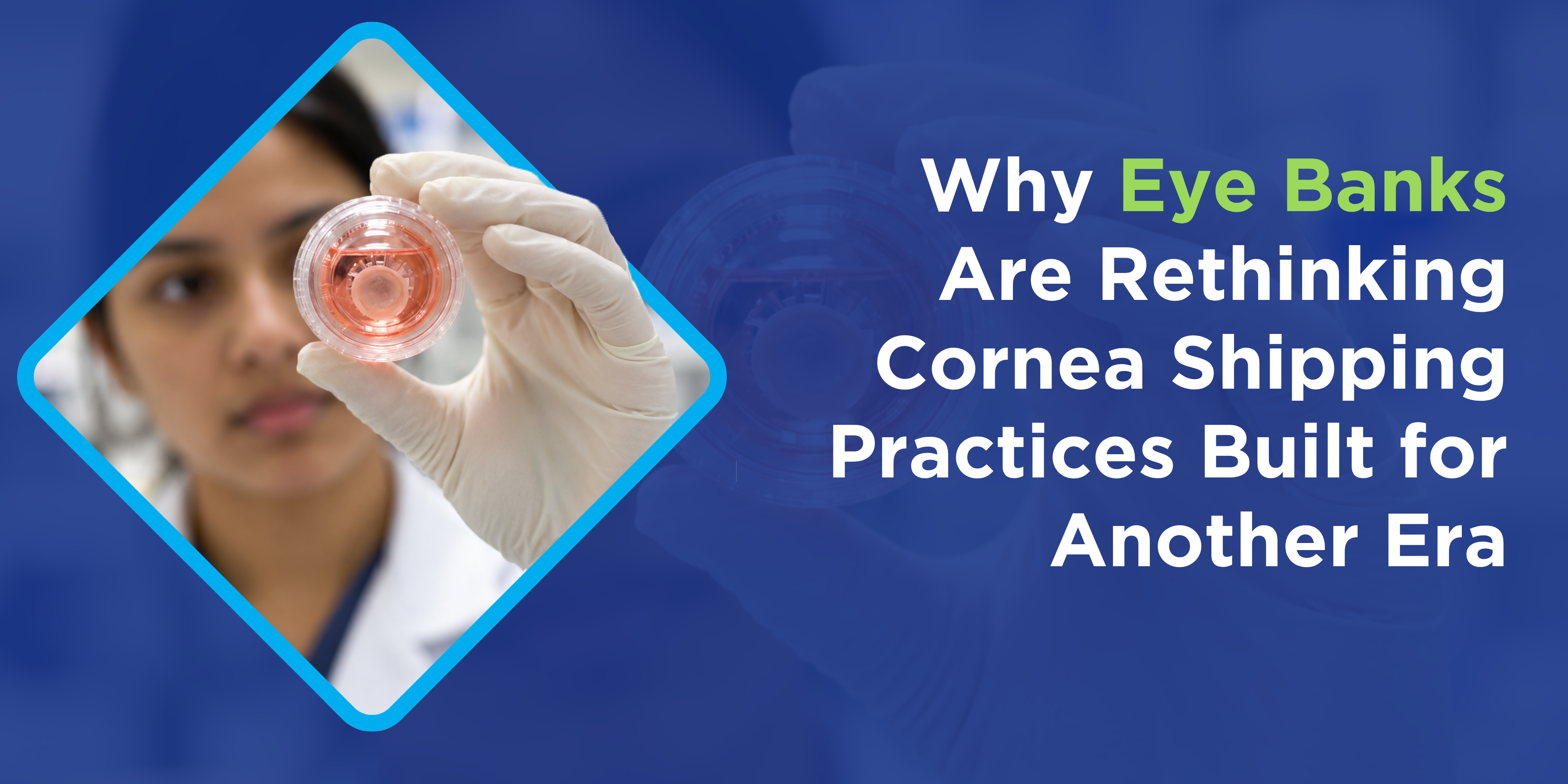
In a recent conversation, Brian Philippy, Director of Business Development at Lions Gift of Sight, and Jacob Schwarz, a Research Associate, described what they've learned by tracking corneal tissue from the eye bank to the operating room. Their findings point to several long-standing habits in eye banking that made sense when they began and deserve a second look now.
Philippy recalls being a young eye banker in the 1990s and having his Medical Director, who had been in the field since the late 1950s when eye banks were first forming, share a simple rule with him about corneas that had spent too long out of refrigeration. “He would say, ‘Would you eat that steak if you left it out on the counter for more than an hour?’” he recalled. “‘No, you wouldn't do that. So the tissue can't be good.’”
“That's not very scientific. It's going by feel,” he said, adding that in the early days of eye banking, feel was what people had to work with. Now, with the help of science and technology, the question the “steak rule” tried to answer should’ve grown into an SOP by now, but why hasn’t it?
Let’s do the math on the shipments
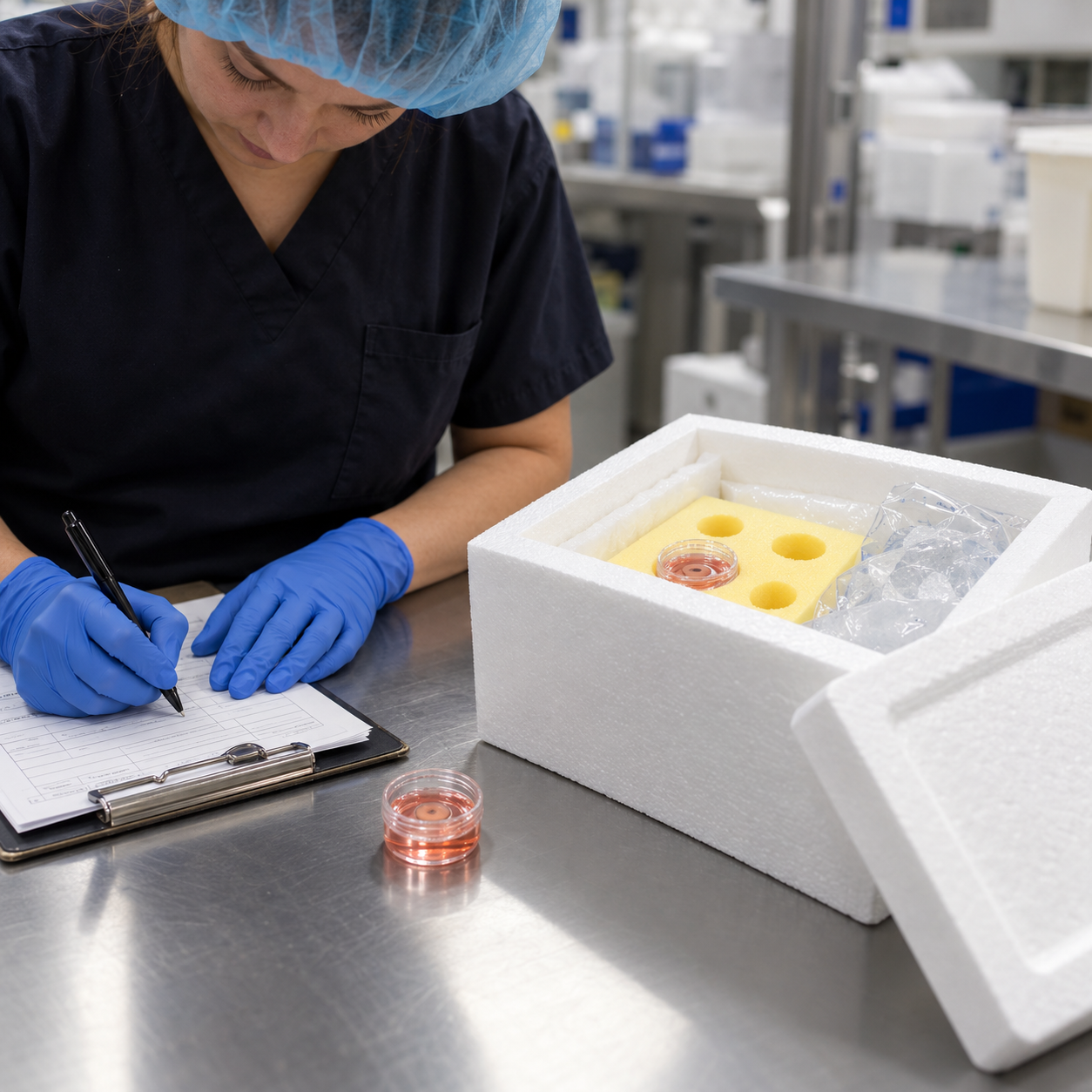
When a cornea arrives at a hospital, a surgeon or transplant coordinator opens the package to check it. Often that check starts with looking for ice. When the ice has melted, many receivers reach for the ice bag and feel whether the water is still cold.
Philippy walked through the logic that makes the touch test work. According to validation testing, a traditional foam cooler sitting at room temperature warms its water from 8°C to 21°C over about eight hours, following a predictable curve. If the water still feels cold, a receiver can reason that the package is still inside that eight-hour window. At Lions Gift of Sight, eight hours is also the eye bank's policy limit for tissue in those conditions. That limit comes from the work of the researcher who developed Optisol-GS, the most common corneal storage solution in the United States.
The reasoning holds as long as two things stay true: the cooler has to warm the way its validation says it will, and the eye bank that shipped it has to share that same eight-hour limit. Over the course of our conversation, it became clear that neither one can be taken for granted anymore.
Many eye banks, Philippy explained, still ship in a packaging setup copied from a single validation done around 2010, because building new validation data takes resources most eye banks don't have. Schwarz's advice to anyone working from an older validation was to revisit it, starting with a look through their own shipping records.
Philippy also shared a detail that often gets missed. When an eye bank adopts a package that someone else validated, its job becomes verifying that staff pack the box exactly as validated, down to where the ice and the corneas sit. Any departure from that procedure, he said, means the package is no longer validated.
When a new surgery changed the clock
For years, eight hours was a workable reference point. Then transplant surgery changed. Surgeons increasingly moved to endothelial keratoplasty, a procedure that replaces only the thin inner layers of the cornea instead of its full thickness.
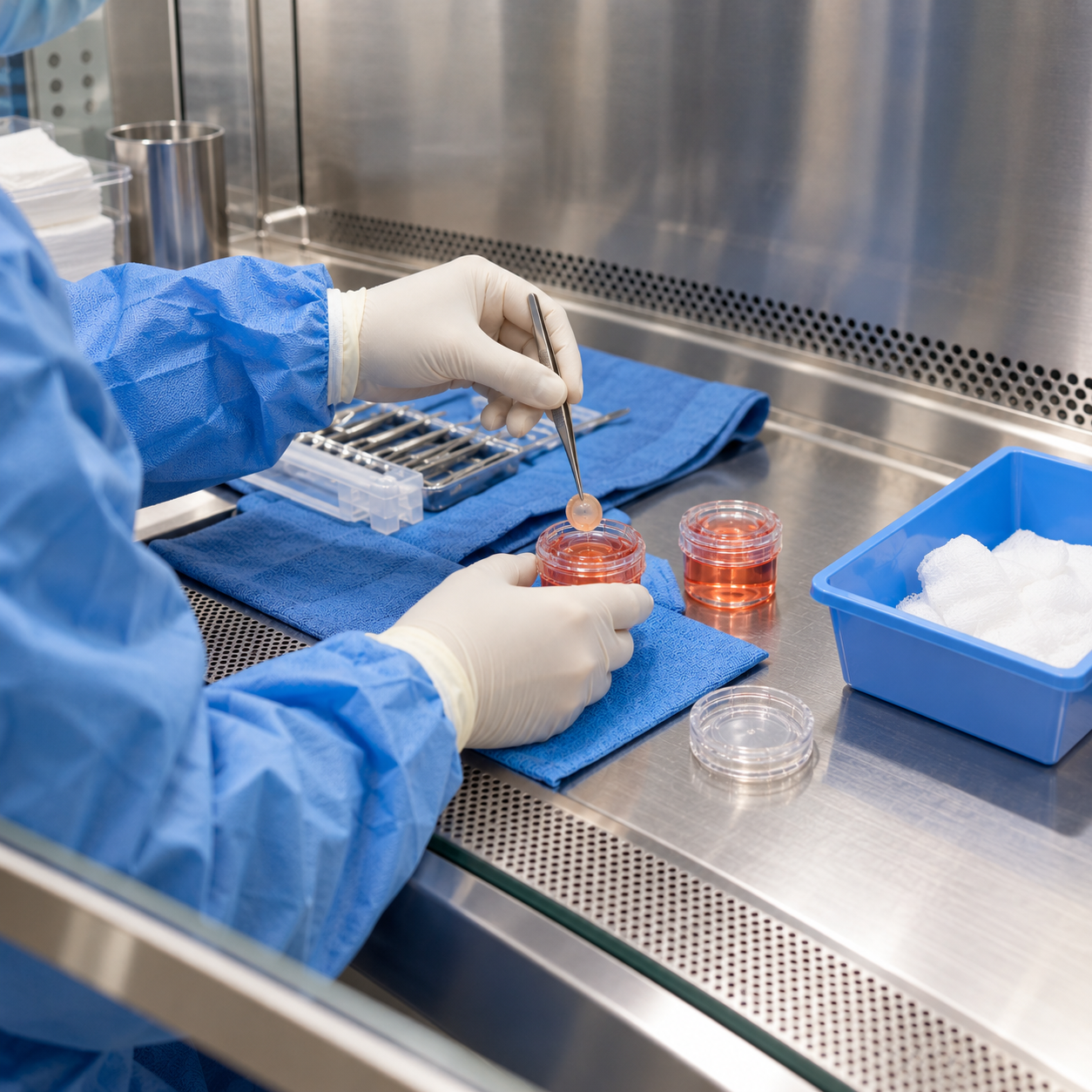
To help us understand what that means inside the eye, Philippy described a thin graft pressed against the patient's own tissue, “essentially creating a little sandwich inside your eye.” Any fungal elements caught between those layers find an ideal place to grow. As endothelial keratoplasty became common, eye banks began seeing more fungal infections. EBAA adverse reaction reports have tied fungal infections more closely to endothelial keratoplasty, and later research points to the extra handling and warming cycles in graft preparation as a possible reason.
Eye banks responded accordingly. According to Philippy, about a quarter have since cut their maximum warming allowance to two hours, while others still use the historic eight. The trade-off cuts both ways, he explained, because the antibiotics in the storage solution also work better as the tissue warms. “The longer you put that cornea out in warm conditions, the fewer bacteria you're going to have, but the more fungus you're going to have,” he said. “So, there's no winning here.”
So what does that mean for the cold to the touch test?
Well, it’s in an odd spot. A cornea that still feels cold after six hours out of refrigeration sits comfortably inside one eye bank's policy and well past another's. The people who write those policies also have little published research to lean on. “You're not going to find any of this information in peer-reviewed publications,” Philippy said. He explained that the subject carries a perceived liability risk, which has kept anyone from studying it and putting the results in print.
As for the last mile, it just got longer.
Schwarz believes the touch test could use some help. Low-cost temperature indicators, from liquid crystal strips to color-change labels, can show what a hand can't. He described pulling nearly melted ice bags out of test coolers and searching for “one little ice cube” still hiding inside.
Philippy supported the goal and added a warning from overseas. Egypt, he noted, has been the top destination for American corneas for years, and its customs officials have developed their own routines. If customs agents begin reading temperature indicators, he said, “there's going to be a hardline stop at eight degrees,” with none of the context a trained receiver would bring. In his view, the tools become useful when everyone who opens the box has been taught how to read them, and he cautioned against rolling them out globally before that education is in place.
Schwarz has spent much of his time tracing where a cornea actually goes after it leaves the building. He followed tracking numbers from hub to hub and placed temperature loggers both inside and outside the packages, which let him map the journey hour by hour. In his measurements, the plane rides tended to hold around 50°F. The local delivery trucks matched whatever the weather was doing outside.
Philippy sees the biggest shift on these trucks. The longest a package used to ride on a local pickup or delivery truck was about two hours. Lions Gift of Sight is now seeing six to eight hours as the maximum, even on shipments that arrive on time. With that much exposure, he said, a package validated for 48 hours can stop holding its temperature range closer to hour 36, and it spends the rest of the trip warming in the back of a truck. As a result, some packages actually arrive hot.
And in the end, it’s the surgeon’s decision.
A surgeon weighs how urgently the patient needs tissue against how soon another cornea might become available, which in some parts of the world is far from certain.
Better packaging can help in that moment even when it leaves an eye bank's policy untouched. Schwarz has tested coolers packed with anywhere from 2 to 16 pounds of ice, and in the same two-inch foam cooler, the warming curves looked remarkably similar. The difference came from changing the insulating material or adding a layer, which slowed warming by four to six hours in his testing.
“Yes, you are out of range, and maybe you've been out of range for four to six hours,” Philippy said, “but that 13 degrees Celsius is better than 40 degrees Celsius for eight hours.”
“If eye banks were taking the time to get more knowledgeable on the nuances of this, every facet of it, the decisions made would be different,” Philippy said. Every cornea represents a donor's gift and a patient waiting for sight, and that makes getting this knowledge into more hands worth the effort.
Watch the full Precision Perspectives conversation
--------------------------------------------------------------------------------------------------------------
If you're ready to take a closer look at your own shipping lanes and package
validation, our team is glad to talk it through with you at sales@flymaxq.com
--------------------------------------------------------------------------------------------------------------
References


Efficient Solutions, Exceptional Results.