%201.png)

Cell and gene therapies are changing what's possible for patients with cancer, rare diseases, and other serious conditions. But as these therapies move from specialized treatment centers toward broader patient access, a harder question is emerging: can the supply chain actually keep up?
The challenge goes beyond manufacturing or administering the therapy. It spans storage, packaging, transportation, temperature control, and chain of custody. For specialty pharmacies taking on a larger role in CGT management, the cold chain isn't just a logistics function anymore. It's becoming part of the therapy itself.
These Therapies Carry a Fundamentally Different Risk
Many CGTs are living or highly sensitive biological products with narrow temperature requirements, and some require frozen or cryogenic storage. These products can also be extremely valuable and manufactured for a single patient. That combination raises the stakes considerably: high product value, tight handling windows, complex logistics, and almost no room for failure. A temperature excursion or shipping delay can jeopardize the product and delay treatment.
The Research Points to a Growing Access Gap
A 2025 study in Cytotherapy surveyed 124 U.S. oncologists and 19 CGT experts on the barriers to CGT access. Ninety-nine percent of oncologists agreed CGTs represent important medical innovations, yet 64% said these therapies were not readily accessible to patients who qualified for them. About half of the CGT experts pointed to cold-chain storage, warehousing, and logistics as a primary concern.
The takeaway: today's systems can likely handle current volume. The real question is whether the infrastructure exists to support tomorrow's demand, as more shipments, destinations, and handling scenarios come online.
Here’s Why the Cold Chain Works as a Full System
It's tempting to focus on packaging alone, but packaging is one link in a longer chain:
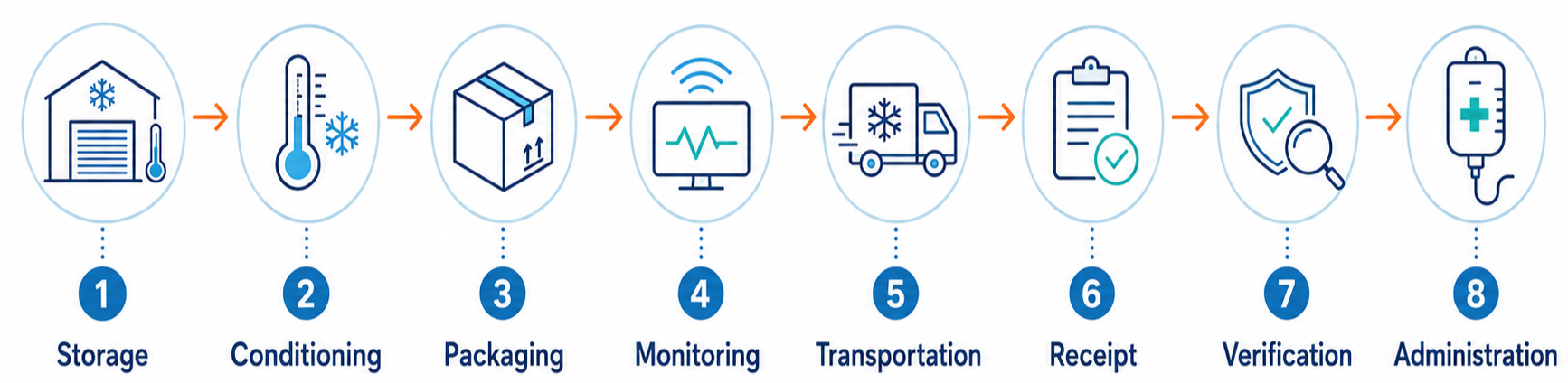
A failure anywhere in that chain can compromise the product.
So that tells us, instead of being treated as a single packaging decision, cold-chain management needs to be treated as a quality system.
Where is the industry heading? In October 2025, AABB's first Cell and Gene Therapy Standards for Pharmacy took effect, establishing a pharmacy-specific framework for receiving, storing, handling, and dispensing CGT products, with a focus on patient safety, product integrity, traceability, and operational readiness.
What Must Specialty Pharmacies Build to Keep Up:
As CGT access expands, pharmacies will need capabilities that were once concentrated in major treatment centers:
Access Is Moving Beyond Major Treatment Centers
The bigger test comes as CGTs move past the institutions that already have the infrastructure to manage them, into specialty pharmacies, regional distribution centers, and even home-based care. A system built around one specialized center with dedicated staff won't automatically translate to a distributed network. Getting there will take standardized processes, validated packaging, reliable monitoring, trained personnel, and clear contingency procedures.
The future of cell and gene therapy isn't only about developing treatments that change patients' lives. It's about building the infrastructure to get those treatments safely to the people who need them, consistently and at scale.
----------------------------------------------------------------------------------------------------------------------------------------------------
Not sure where your current process has gaps? We can help you map it against where the industry is headed.


Efficient Solutions, Exceptional Results.